UL 3700 explained: the certification for plug-in solar kits
UL 3700 is the first US test program for plug-in solar. What it covers, which states require it, which products have it, and how it differs from UL 1741.
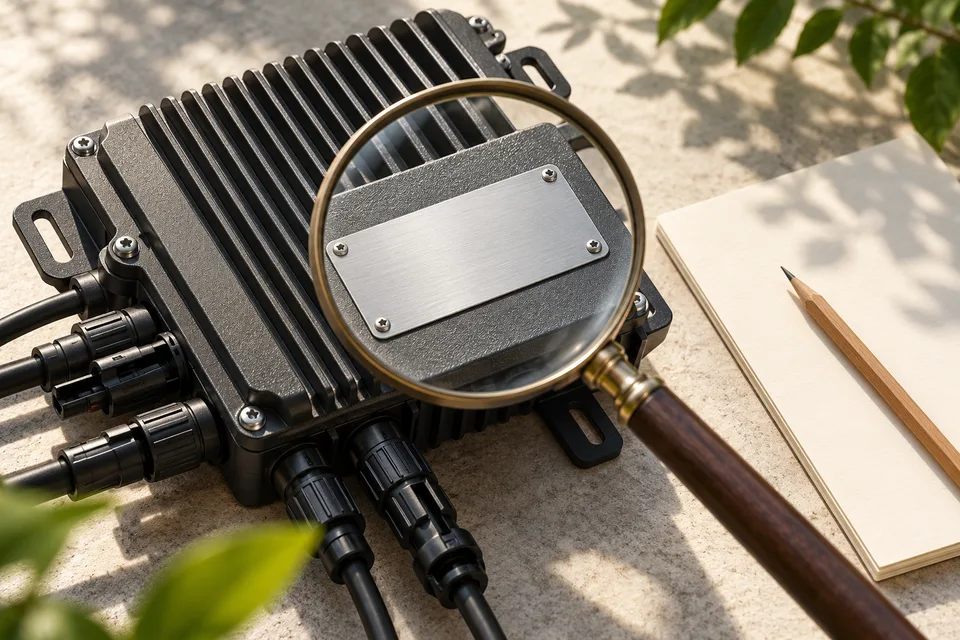
UL 3700 is the safety test program for plug-in solar equipment in the US. Its full name is the Outline of Investigation for Interactive Plug-In Photovoltaic Equipment and Systems. UL published it as an outline in mid-December 2025, and UL Solutions launched a testing and certification program based on it in January 2026.
What it tests
According to UL Solutions’ announcement, UL 3700 sets construction, performance and labeling criteria and requires features that:
- prevent current flowing the wrong way when the grid is down (backfeed);
- protect against overloading;
- reduce the chance of touching live parts;
- support safe installation.
The Clean Energy States Alliance guidebook for policymakers notes that UL had not yet produced a full consensus standard, and expects the final version to require a unique plug and receptacle, bidirectional GFCI and overcurrent protection. Treat UL 3700 as the best available bar today, likely to tighten.
How it differs from UL 1741
UL 1741 is the long-standing standard for inverters connected to the grid, including rooftop microinverters. It was written for hard-wired systems installed by electricians. UL 3700 addresses what is new about plug-in systems: an exposed plug, an ordinary receptacle and a homeowner doing the install. A UL 1741 inverter is not automatically safe as a plug-in product.
Which states require what
| State | Listing requirement in the law |
|---|---|
| Vermont | UL 3700 or an equivalent NRTL certification, plus IEEE 1547-2018 |
| New Jersey | Listed or certified under UL 3700; 400 W and below exempt |
| Connecticut | UL or equivalent lab, to UL 1741; also IEEE 1547 and NEC |
| California | Certified as plug-in PV by UL or an equivalent lab |
| Utah | Certified by UL or an equivalent nationally recognized lab |
| Virginia | Certified by an NRTL; 391 W and below exempt from listing provisions that would require wiring changes |
| Maryland | Certified by an NRTL such as UL; 391 W and below exempt from the same provisions |
The 391 W and 400 W exemptions reflect a long-standing idea that very small sources pose little overload risk on a household circuit. They are legal thresholds, not a statement that uncertified equipment is safe.
Products with UL 3700 certification
As of Solar.com’s September 22, 2026 roundup:
- Hoymiles HiFlow Pro, the first microinverter certified to UL 3700, announced July 2026.
- APsystems EZ1, certified by CSA to UL 3700.
- Mango Power S kit, four 300 W panels with four microinverters and a gateway.
NRG Clean Power reports that reaching California’s 1,200 W cap with the HiFlow Pro means four 360 W units on separate outlets, not chained together. Product lists change quickly; confirm a listing on the certifier’s own directory before buying.
How to check a listing
- Find the certification mark on the product label, not only in the listing description.
- Note the certifier (UL, CSA, Intertek, TÜV) and the file or certificate number.
- Search that number in the certifier’s public directory and confirm it names the plug-in standard.
- Make sure the certification covers the microinverter or system you are buying, not just the panels.
Common questions
Is UL 3700 a full UL standard?
Not yet. It began as an Outline of Investigation, a document UL uses to certify new product types before a consensus standard exists. The final standard may differ.
Does UL 3700 certification mean my outlet is safe to use?
It means the equipment passed tests for backfeed, overload protection, contact safety and installation features. You still need a suitable circuit, a proper wall outlet and secure mounting.
Are CSA or ETL certifications acceptable?
Most state laws accept certification by any nationally recognized testing laboratory to the named standard, so a CSA or Intertek listing to UL 3700 generally counts. Check your state's exact wording.
Sources
- CleanTechnica (UL Solutions release), UL debuts testing and certification framework for plug-in solar, Jan 8, 2026
- pv magazine, A guidebook on plug-in balcony solar for U.S. policymakers, Jan 14, 2026
- Solar.com, UL 3700 certification, which plug-in solar products have it, Sep 22, 2026
- NRG Clean Power, California's balcony solar bill (SB 868)
- Vermont Act 149 of 2026, as enacted
- pv magazine, New Jersey legalizes plug-in solar up to 1,200 W, Sep 2, 2026
- Connecticut Public Act 26-127
- Code of Virginia §56-596.8